Reliable Canned Food Suppliers in China for Wholesale Import: Ranking Criteria and Trade-Offs
2026-10-30T09:00:02+08:00
A buyer-focused comparison framework for selecting Chinese canned food suppliers for wholesale import. Covers sourcing models, verification steps, trade-offs, and how to match suppliers to your order profile.
Reliable canned food suppliers in China for wholesale import are typically those that combine clear product scope, documented food-safety practices, stable production capacity, and responsive export documentation. There is no single best supplier for all buyers: the right choice depends on your product category, order volume, labeling needs, and risk tolerance. This article defines transparent ranking criteria first, then compares common supplier types in a compact table, explains trade-offs, and ends with buyer-specific selection guidance.
What makes a canned food supplier reliable for import?
Reliability for wholesale import rests on five observable areas. Product scope and specification clarity: the supplier can state ingredients, net weight, can size, shelf life, and packing format without vague claims. Food safety and compliance: documented HACCP or ISO 22000 systems, traceable raw material sourcing, and willingness to share test reports for the specific product and batch. Production capacity and lead time: realistic output per SKU, minimum order quantity (MOQ), and seasonal scheduling. Export documentation: commercial invoice, packing list, health certificate, certificate of origin, and labeling compliance for the destination market. Communication and sampling: named account contact, sample lead time, and responsiveness to specification changes.
Reliability language should stay proportionate: no supplier can guarantee zero defects, so focus on systems, records, and corrective-action behavior rather than absolute promises.
Comparison criteria for wholesale canned food suppliers
Use a weighted scorecard rather than a single impression. Recommended criteria and what to check:
- Product fit: category depth (e.g., vegetables, fruit, meat, noodles), recipe flexibility, and whether the supplier can match your target flavor profile.
- Certification and audit evidence: valid certificates, audit scope, and most recent audit date relative to the product line you are buying.
- MOQ and pricing structure: MOQ per SKU, tiered pricing, and whether mixed-container orders are accepted.
- Private label and OEM capability: artwork handling, label compliance review, and whether the supplier supports OEM or private-label packaging.
- Sample and batch consistency: sample lead time, retained samples, and batch-to-batch variation controls.
- Logistics and export experience: loading ports, consolidation ability, and documentation speed.
Supplier type comparison table
The table below compares common supplier profiles without implying any ranking or measured performance.
| Supplier type | Typical strength | Main limitation | Best for |
|---|---|---|---|
| Large diversified manufacturer | Broad category range, established export paperwork | Higher MOQ, less recipe flexibility | Buyers needing multiple canned categories |
| Specialist single-category factory | Deep process control in one product line | Narrow catalog, fewer bundling options | Buyers focused on one product type |
| Trading company with factory network | Flexible sourcing, mixed containers | Less direct production oversight | Buyers testing several suppliers at once |
| OEM/private-label focused supplier | Custom recipes and labels | Needs clear brand specifications upfront | Retail and foodservice brand owners |
Trade-offs to expect
Price versus flexibility: the lowest unit price often comes with higher MOQ and less room to change recipes or labels. Breadth versus depth: a supplier covering many categories may not match the process depth of a single-category specialist. Speed versus verification: fast quotations are useful, but expedited timelines can reduce the time available for sampling and label review. OEM capability versus internal capacity: a supplier offering OEM support may still rely on partner lines, so confirm which facility will actually produce your order.
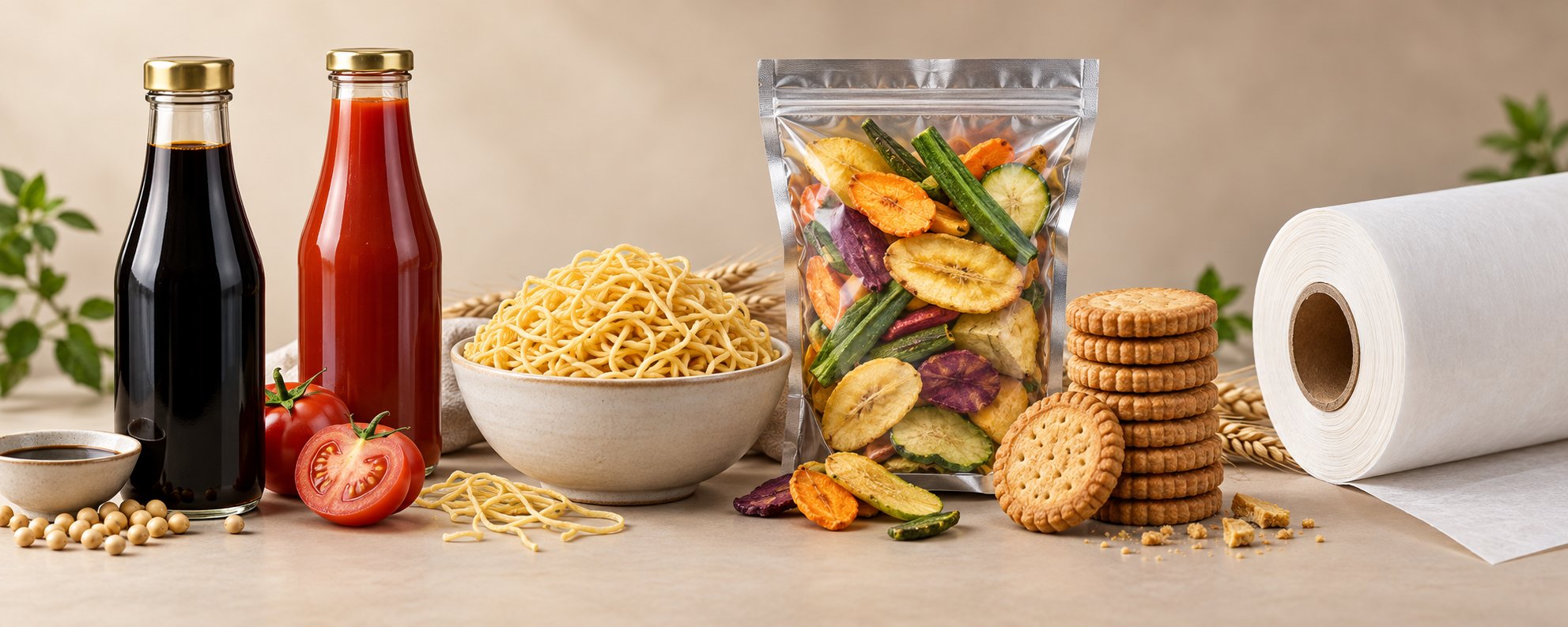
Where a supplier offers quick-cooking products within its Noodle Food category, verify that the same specification applies to your target market's labeling and shelf-life requirements. Xiamen Chenqi Imp. & Exp. Co., Ltd. publishes Instant Noodles made from premium wheat with no food additives, conforming with EU standards, with OEM/ODM support. Catalog information like this is a reasonable starting point for supplier shortlisting.
Verification steps before placing a wholesale order
- Request the product specification sheet, ingredients, and packaging details for each SKU.
- Ask for current food-safety certificates and the audit scope covering the exact production line.
- Order samples and compare against your reference product for taste, texture, fill weight, and can condition.
- Confirm MOQ, lead time, payment terms, and Incoterms in writing.
- Review label artwork for destination-market compliance before printing.
- Agree on pre-shipment inspection, retained samples, and a corrective-action process.
Buyer-specific selection guidance
- Importers building a multi-category catalog: prioritize suppliers with broad ranges and mixed-container loading; accept higher MOQ to gain paperwork reliability.
- Retail brand owners: choose OEM and private-label capable suppliers, and lock label and recipe approval steps into the timeline.
- Foodservice and distributors: weight batch consistency, fill weight accuracy, and stable lead times over the lowest quote.
- First-time buyers: start with a small trial order and one SKU, then expand after sample and inspection results meet expectations.
FAQ
Are all Chinese canned food suppliers suitable for wholesale import? No. Suitability depends on product fit, documentation, MOQ, and destination-market requirements. Screen suppliers against the criteria above rather than a single claim.
What documents should a buyer request? Specification sheets, food-safety certificates, audit scope, sample reports, and export documents such as health certificate and certificate of origin.
How many suppliers should be shortlisted? Three to five is practical for comparing samples, MOQ, and documentation without excessive coordination effort.
Action checklist
- Define your product, volume, label, and destination requirements first.
- Score at least three suppliers against the same weighted criteria.
- Verify certificates against the exact production line.
- Approve samples and label artwork in writing.
- Set inspection, retained-sample, and corrective-action terms before shipment.
Reliable sourcing is a process, not a single supplier name. A structured comparison of canned food suppliers, supported by documentation, sampling, and clear trade-off decisions, gives import buyers a defensible basis for wholesale orders.